Impact
7
Projects reused the design system across multiple products
2
Client contracts signed before launch
30%
Faster production time across design and development
Overview
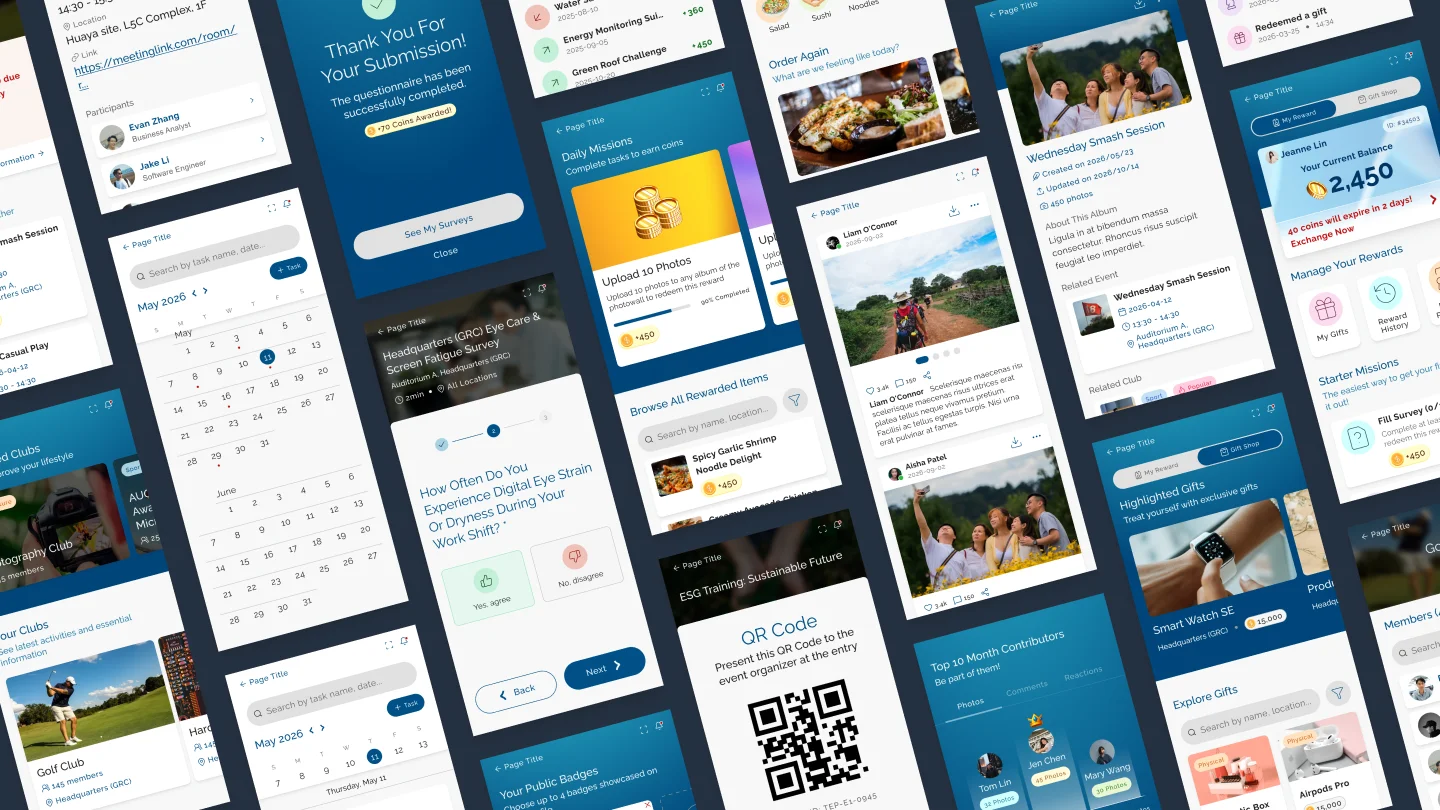
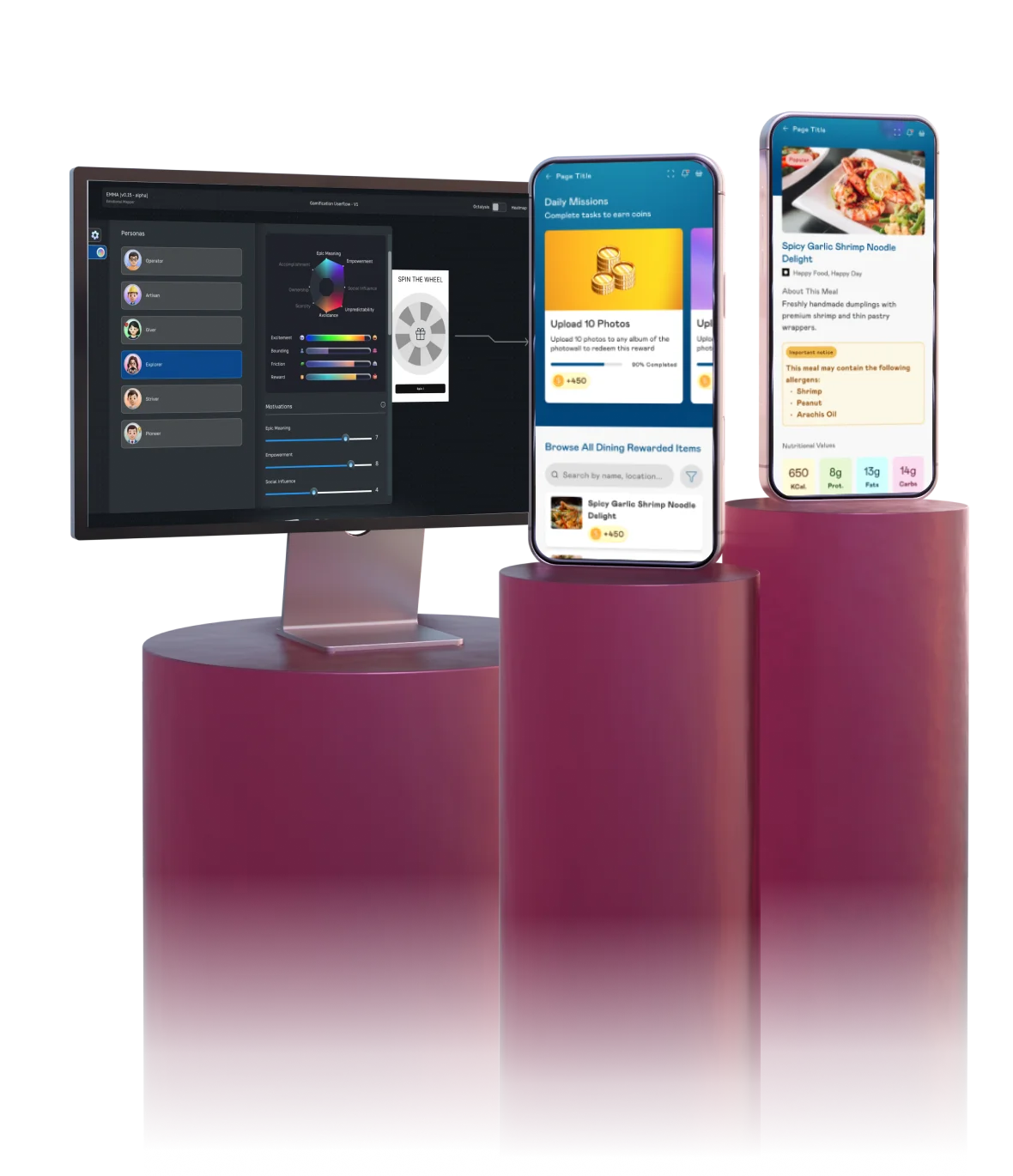
A mobile app was developed to drive talent engagement and improve company culture.
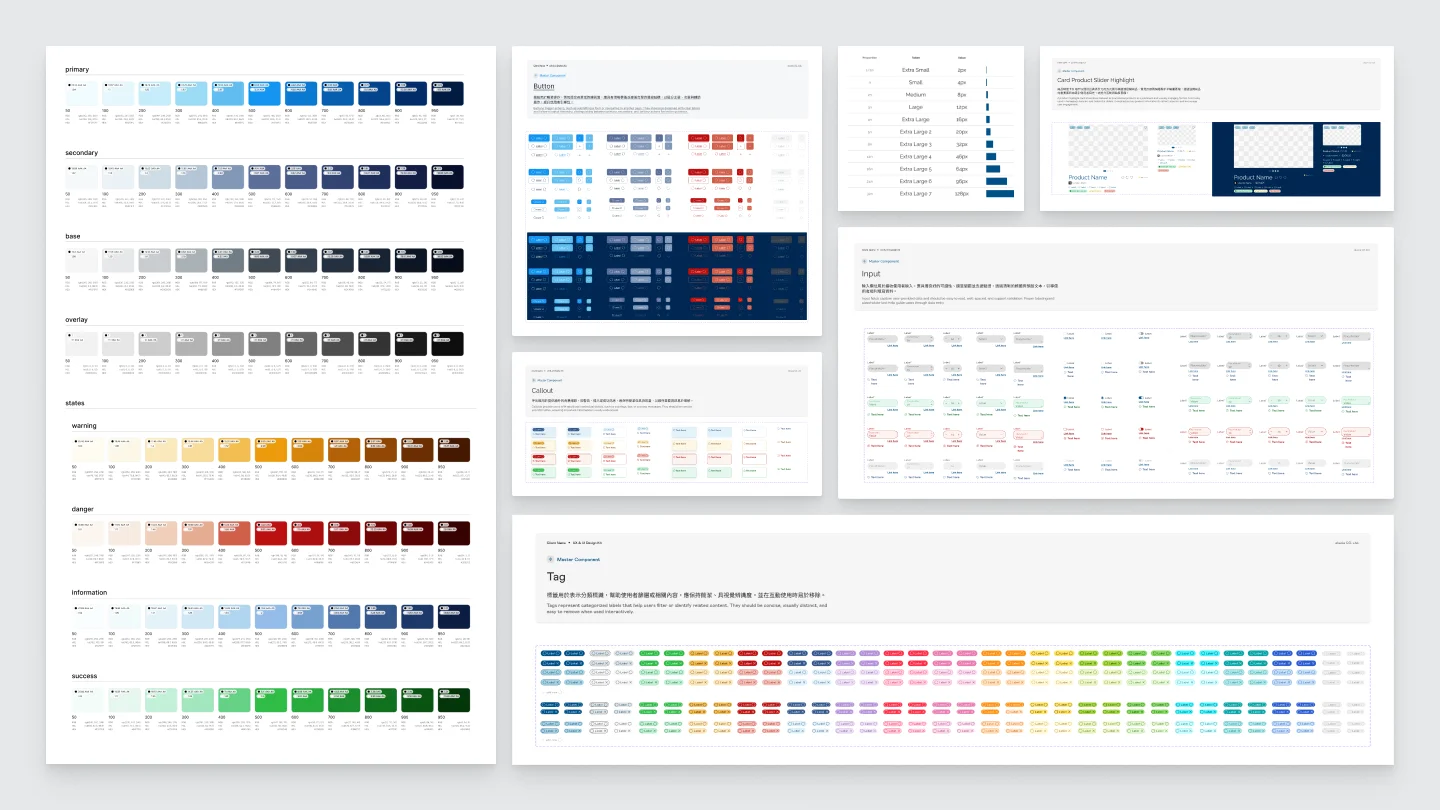
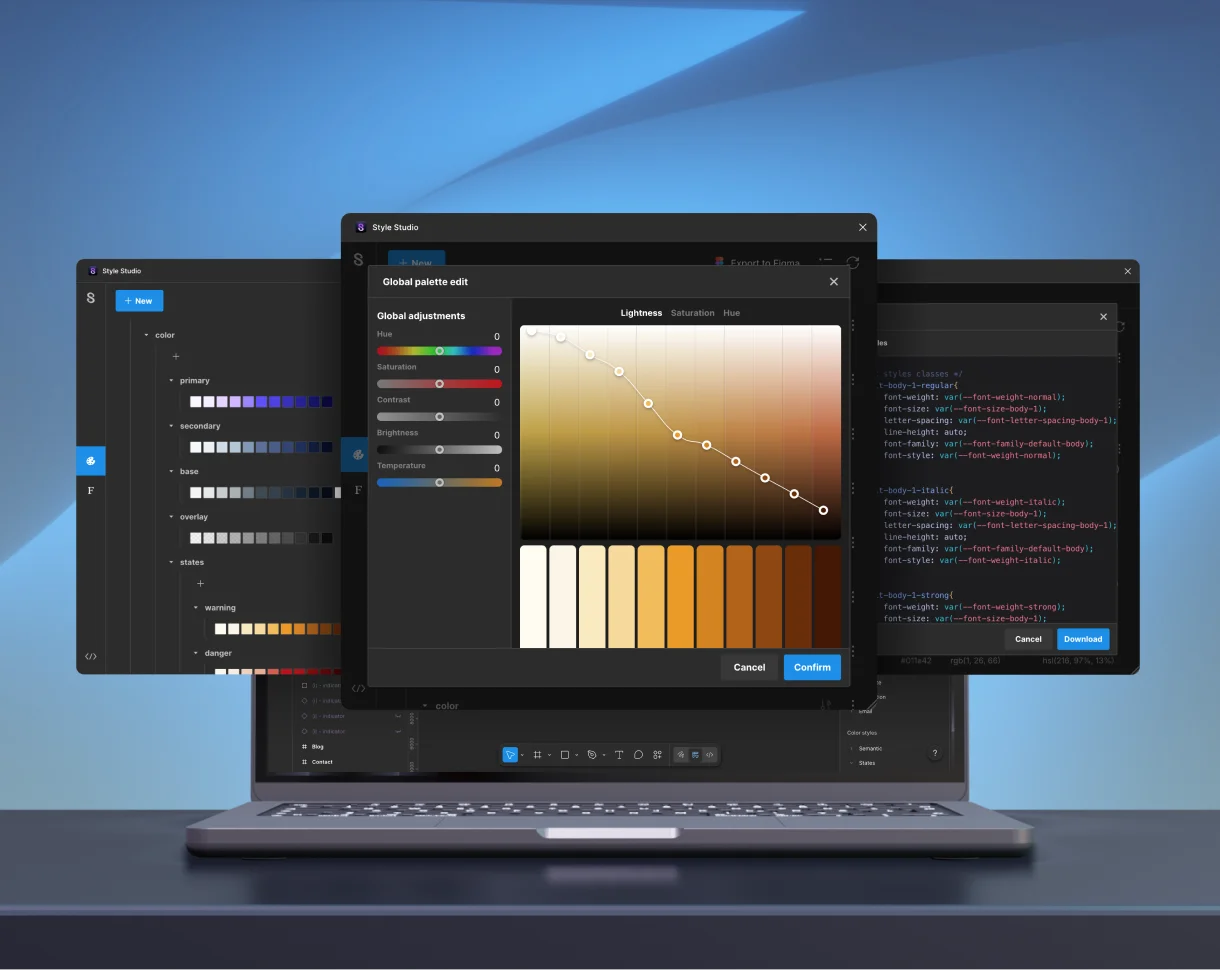
A comprehensive design system was created for the solution.
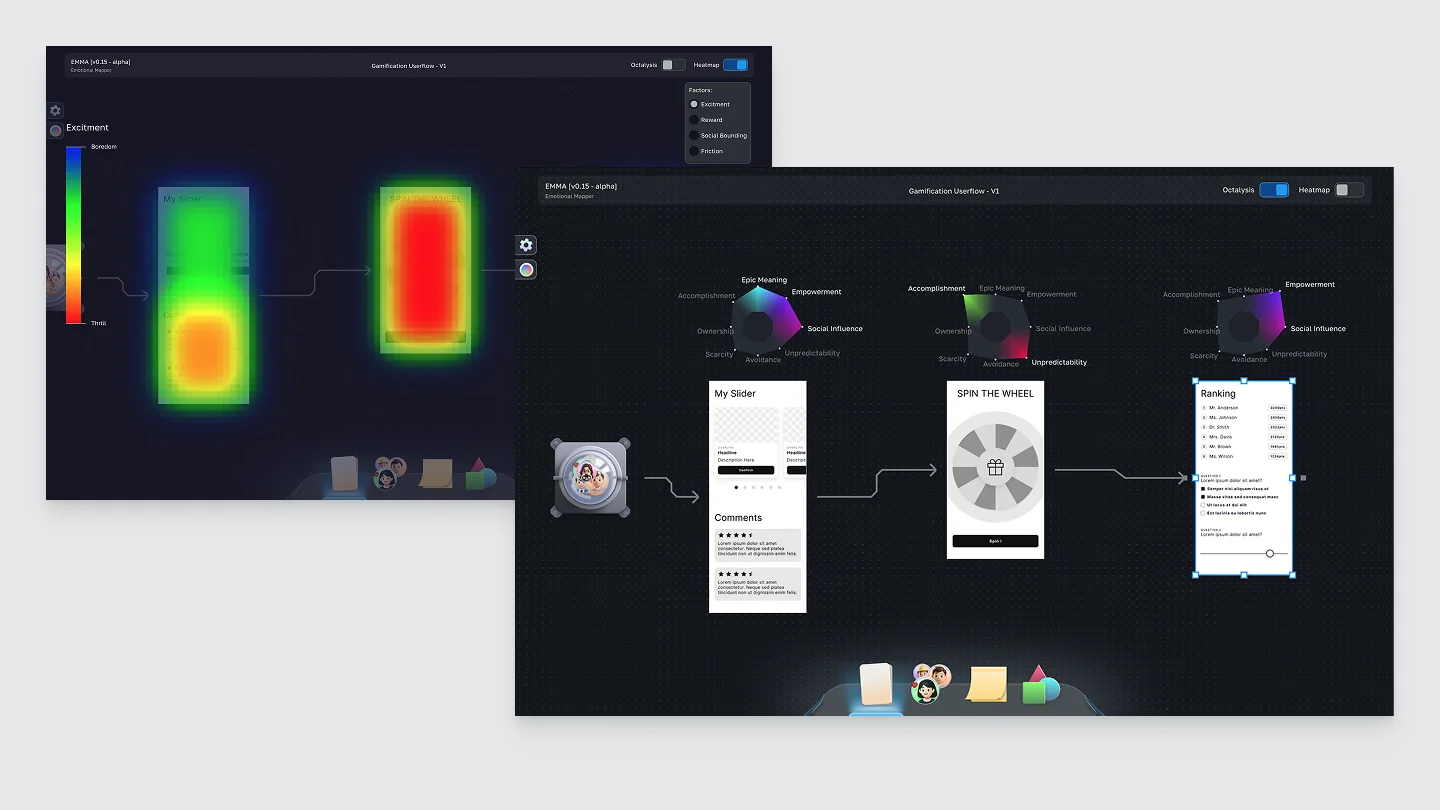
An experimental user-flow tool was developed to better predict user engagement and analyse rewards balance.
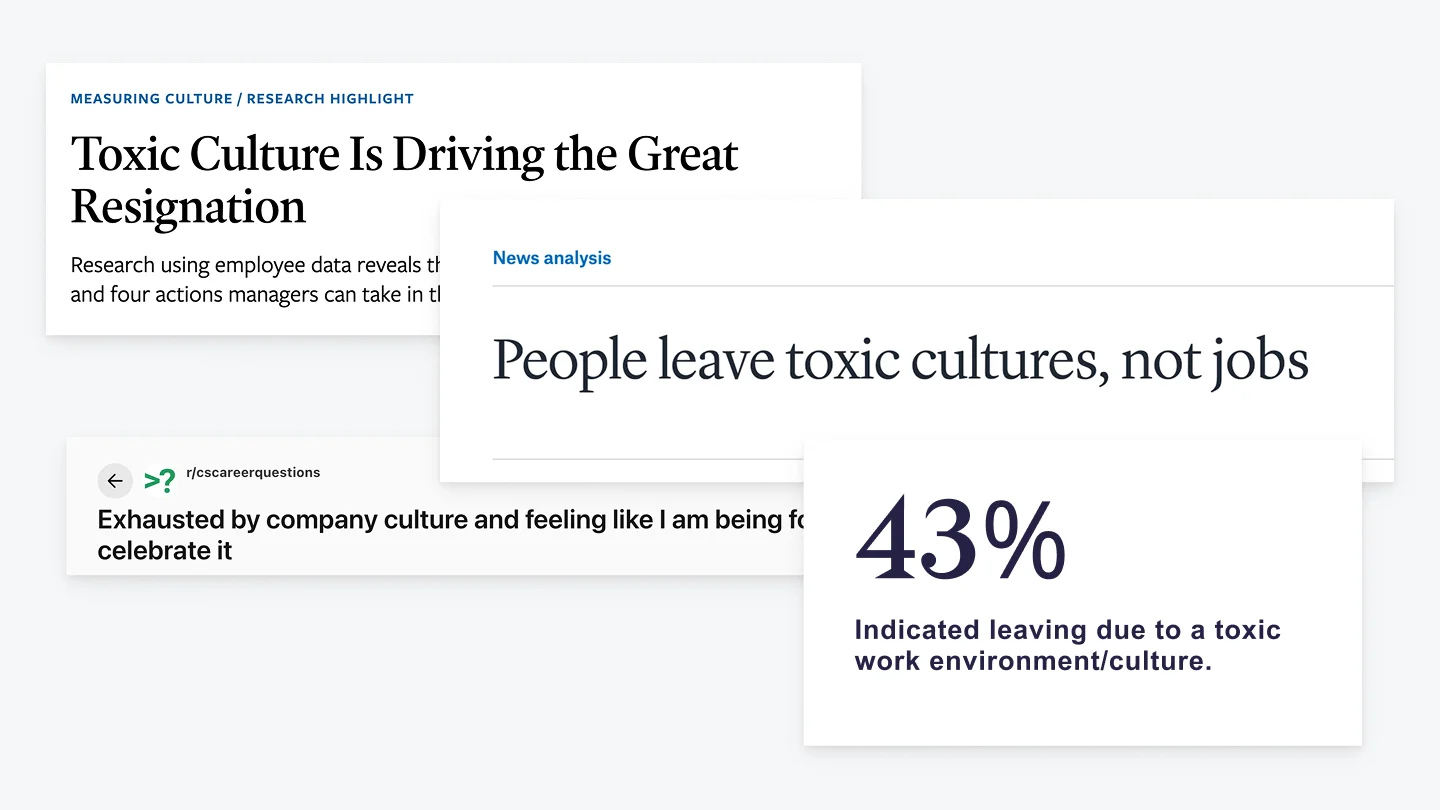
People don't quit jobs. They quit cultures
Research showed that toxic environments, feeling unseen, and feeling stuck were three main reasons talents left companies.
Those pain points became our north star for the project. We needed a platform that makes people feel like they're growing, valued, included. We wanted to turn individual actions into collective belonging.
The platform had to adapt to different industries
Shipping it as a fixed product meant every client got the same features regardless of what actually fit their culture or industry, so we needed to keep it flexible from the start.
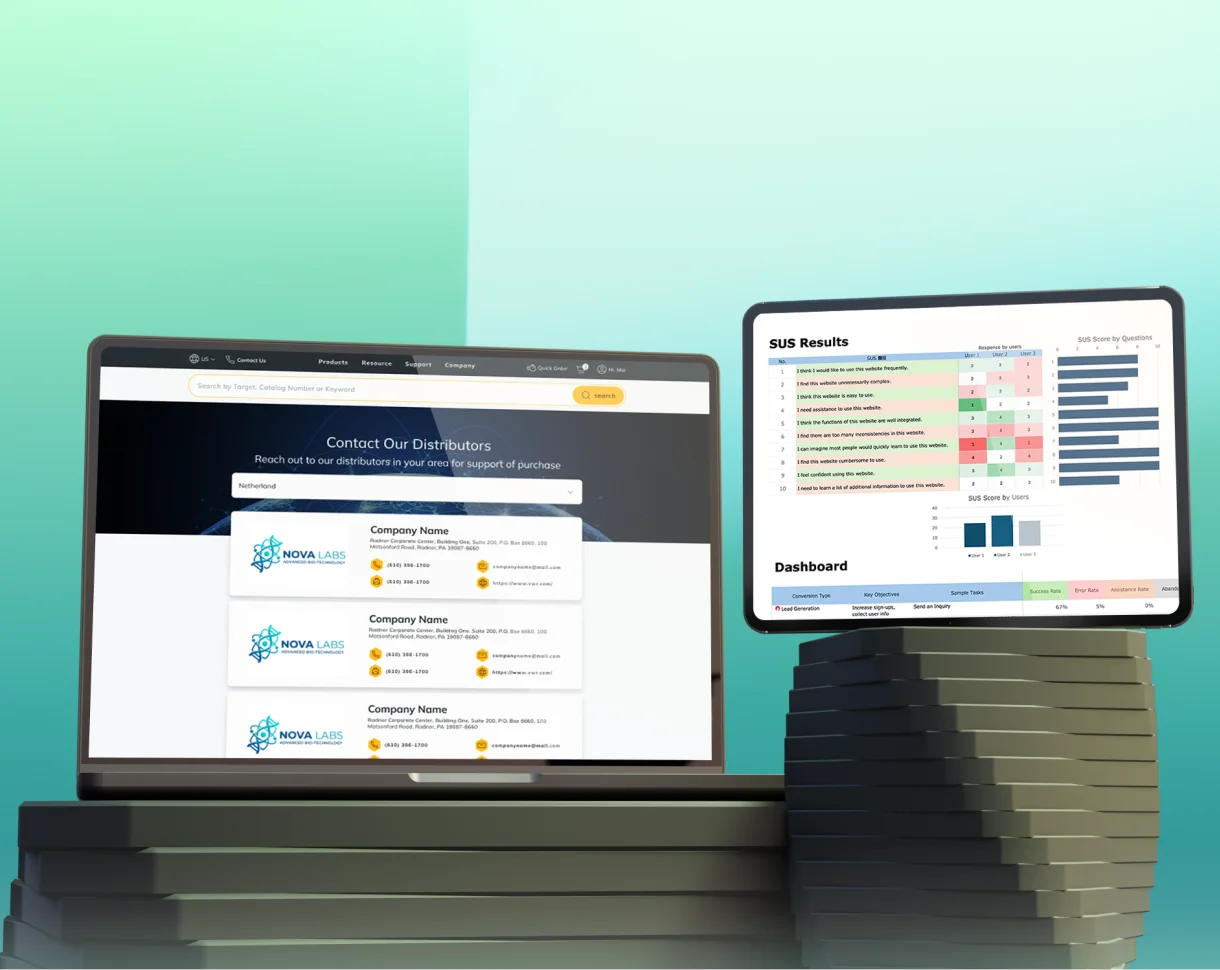
To do so, I decided to establish a flow made of two surveys combined with the project scopes, so the final application would satisfy the initial human needs.
I also built a UI guideline that would let us dial the expression up or down, more playful or more restrained, based on each client's culture.
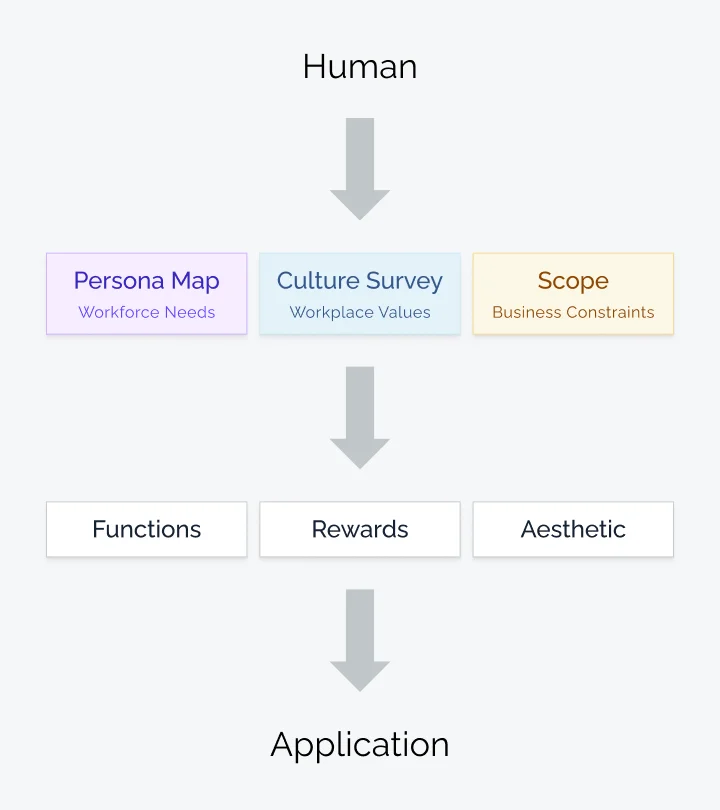
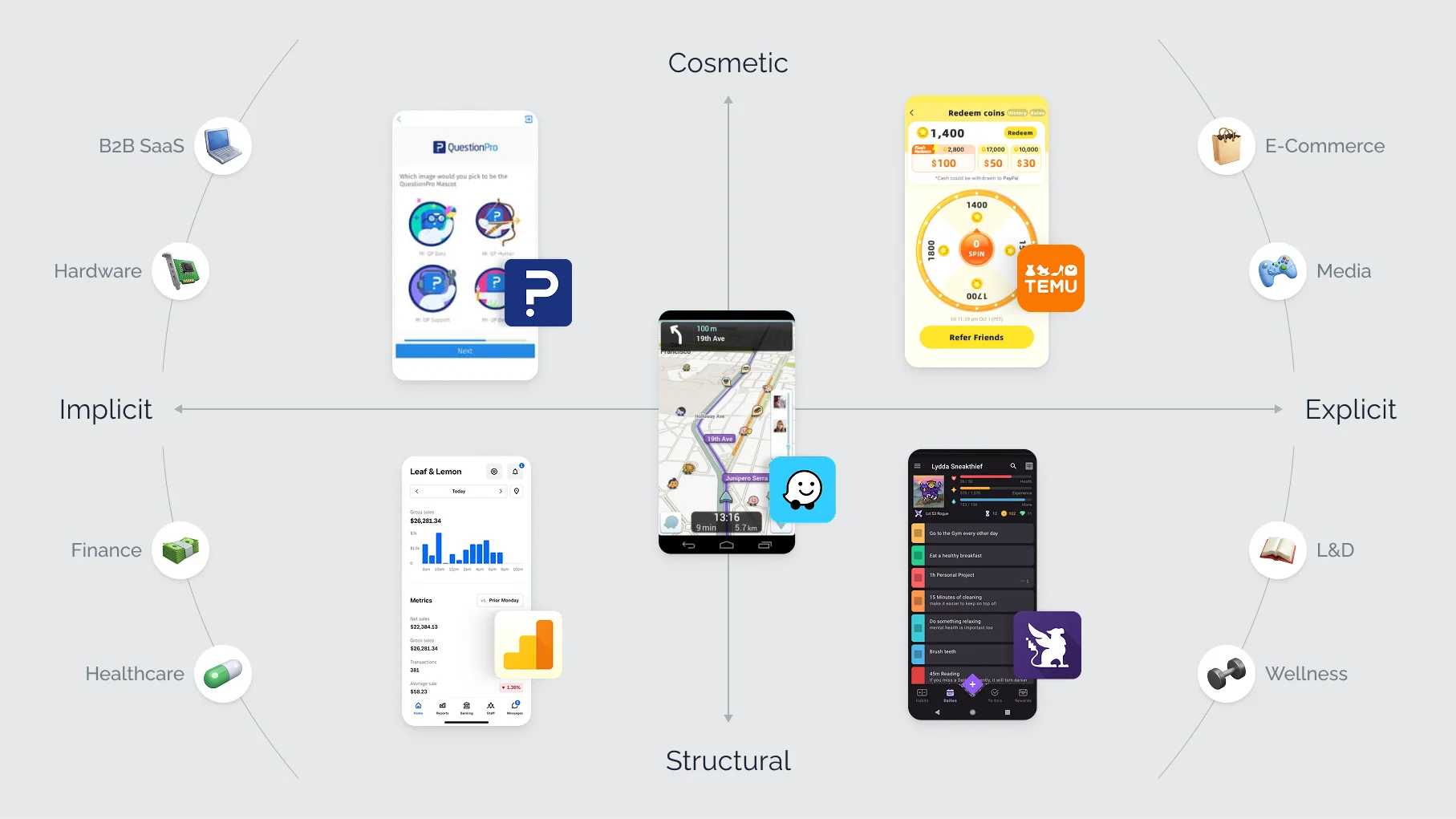
I built a guide to better define the gamification strategy to better suit each company's culture.
Rewards System
I built the engagement layer around gamification
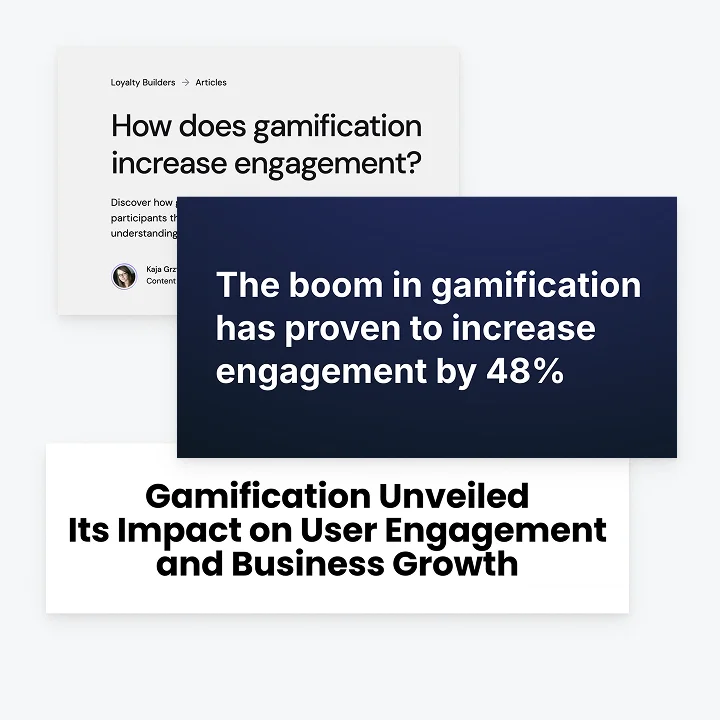
Gamification's proven success and its ability to adapt to any persona made it the ideal candidate for sustainable engagement.
However, developing the reward system was only half the challenge, since we also needed a way to sell it and educate clients on it.
To do so, I partnered with an analyst who owned the sales and delivery side, while I owned the technical architecture. The numerous exchanges helped keep every technical decision tied to a business lens.
Design System
How do you extend a Design System without bloating it?
Since we wanted to reuse this solution across clients, every new component had to be reusable, not client-specific.
However, the real challenge sat on how to educate clients on why some customization could not be done as it would harm the project's scalability.
To answer this, I coupled the design system with a business-oriented guideline, so client would better understand the value of such design system. The guideline was used as a guardrail that we could adapt to each client.
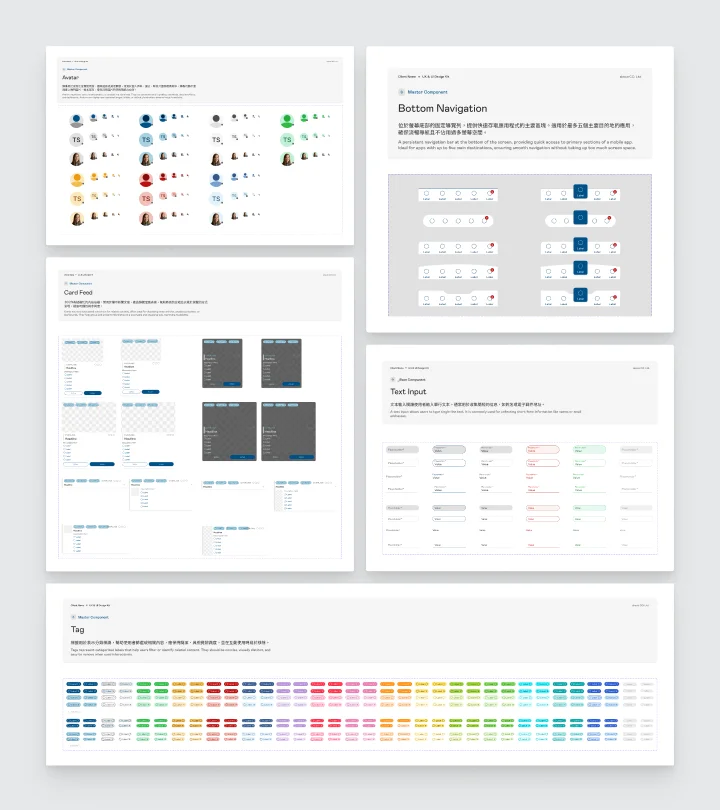
I first added necessary components to the library, ensuring they would serve the project and be reused across devices.
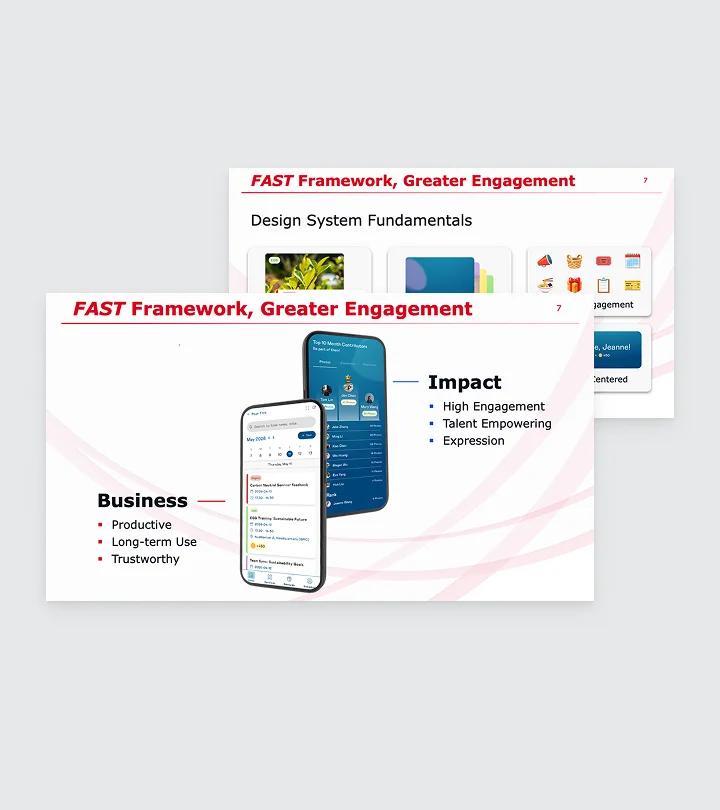
The design system was coupled to a business-oriented guideline, so clients would better understand the design system benefits.
Gamification needed a UX framework, not just a strategy deck
Although our understanding of gamification was solid in theory, we lacked a proper framework to apply it to our design and user-journey.
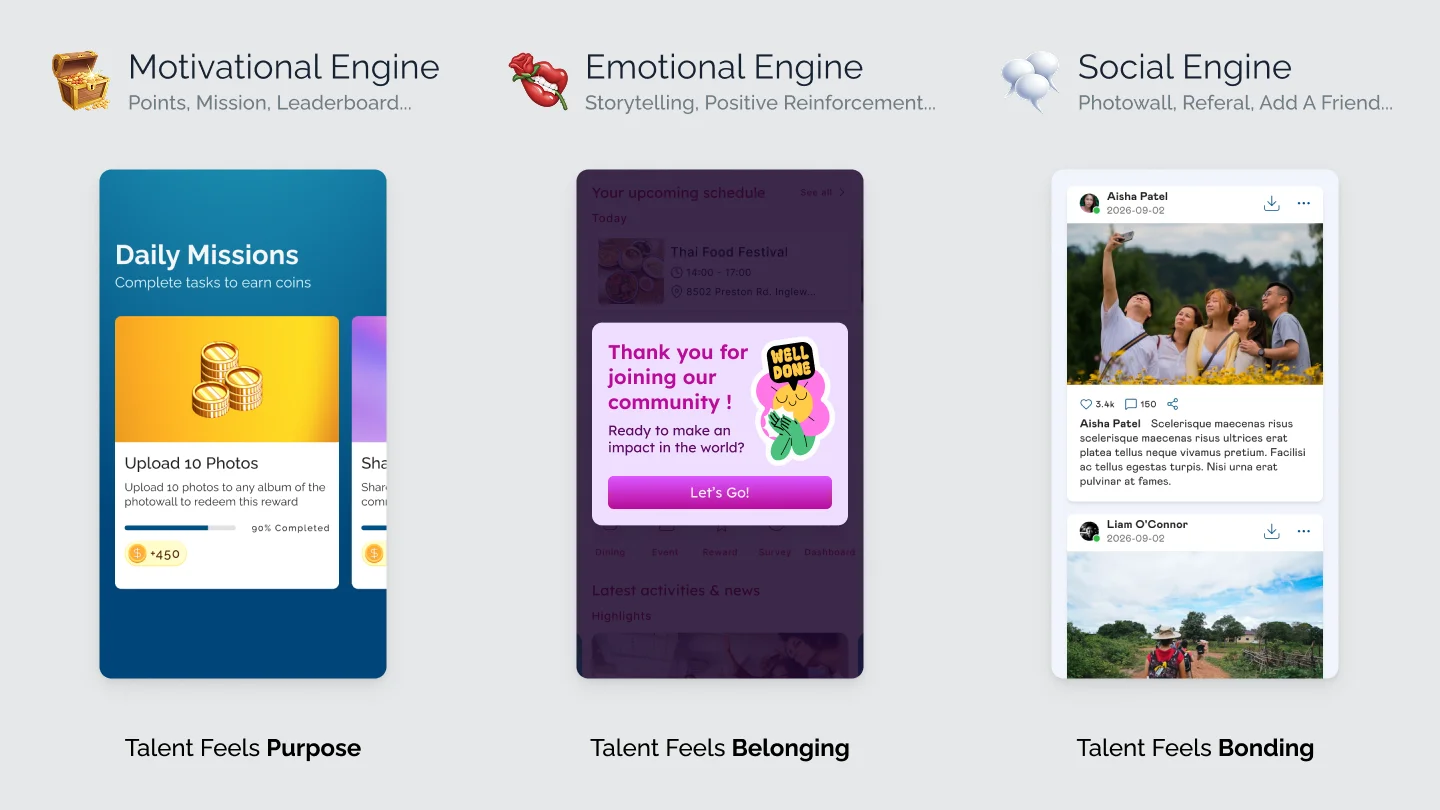
I decided to create three engagement engines that aligned with our initial goals:
Motivation: handling extrinsic motivation (points, gifts).
Emotion: creating intrinsic engagement (storytelling, personalized content).
Social: responsible for team bonding (shared milestones, public recognition).
Each engine became its own set of UI patterns, so a client could dial recognition up, keep rewards subtle, or boost social interaction to better fit their culture.
Resolution
Executives didn't want "gamification"
The word itself read as gimmicky to stakeholders, they wanted something that felt professional.
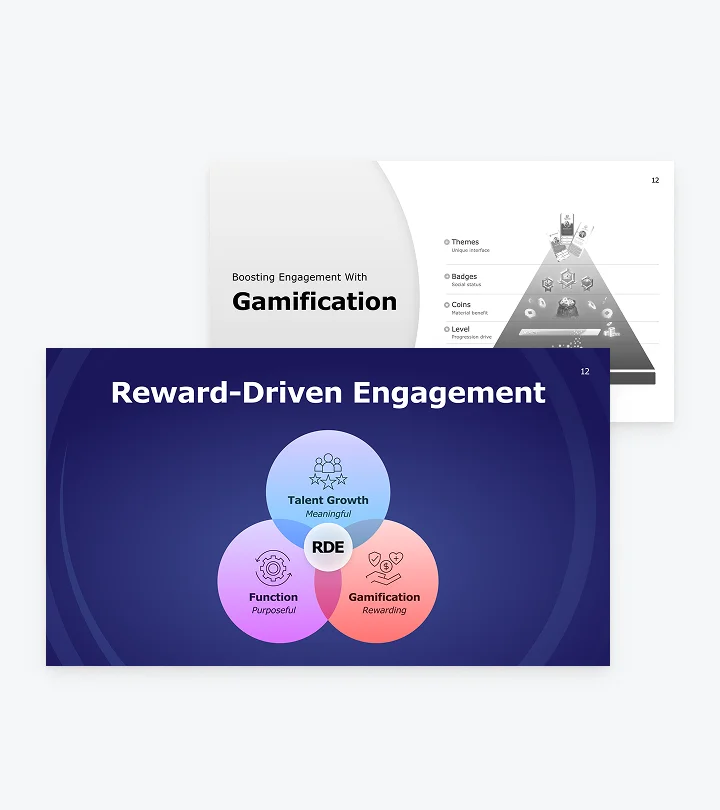
We decided to reframe the entire concept as "Reward-Driven Engagement", and built a story around it that would better align with client's initial concerns.
Slides couldn't sell something this complex
The concept was too new for sales to pitch on slides alone, so we were asked to build something they could actually show.
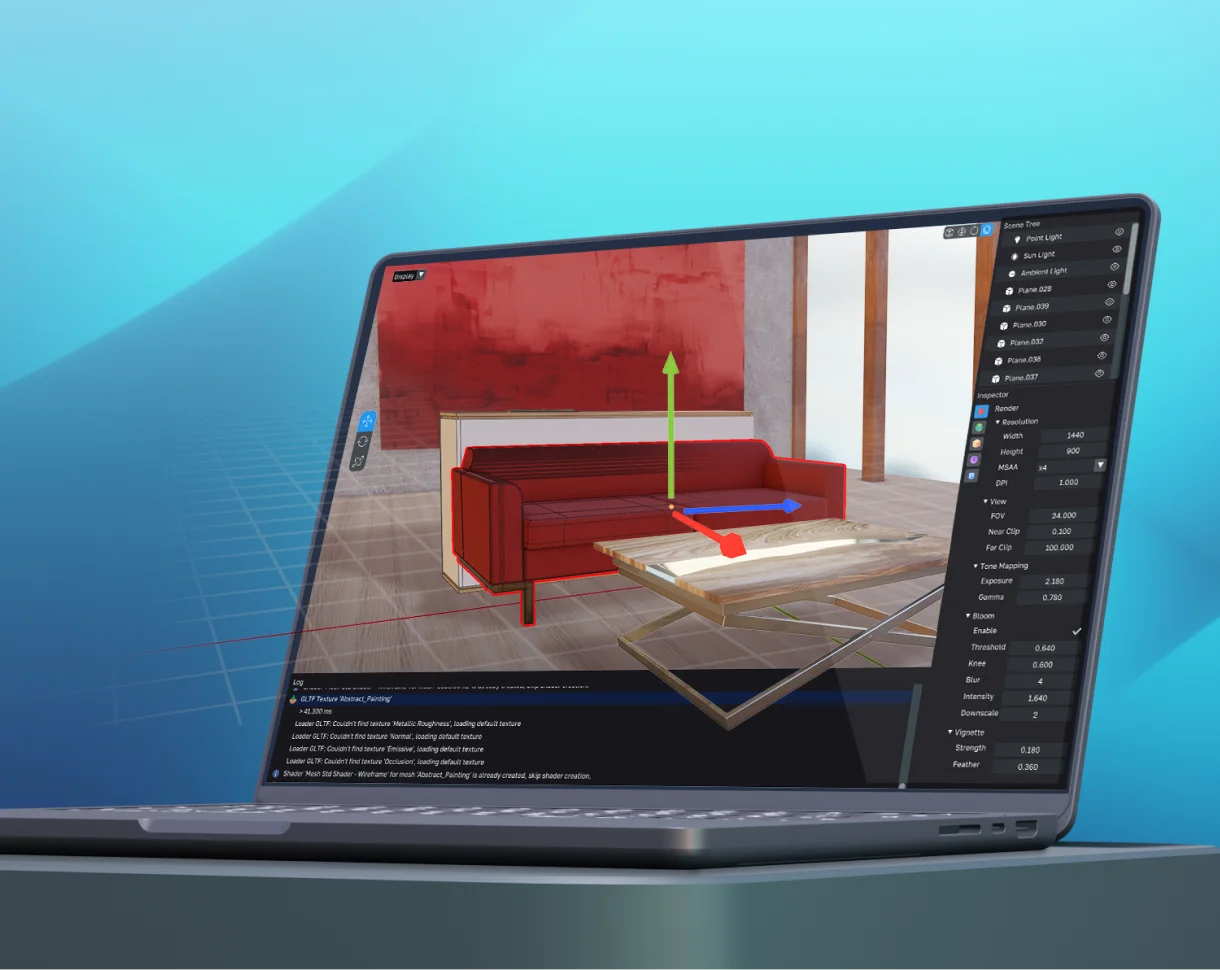
I worked with the dev team to code an early prototype so sales could directly showcase basic mechanics. I also got to create a promotional video mixing AI with mockups to bring the pitch to life.
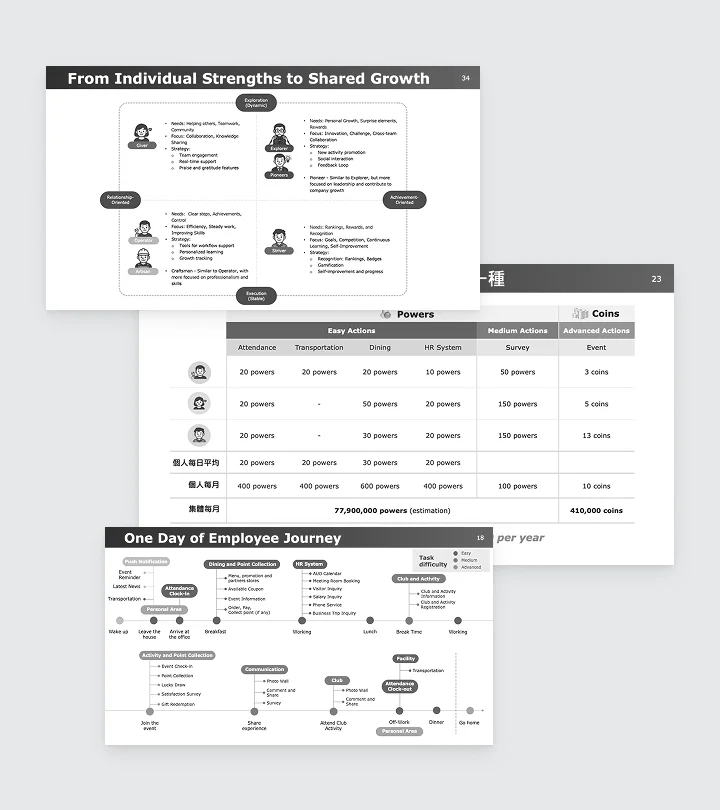
Sales reported the initial slides were too abstract and received mitigated feedback from clients.
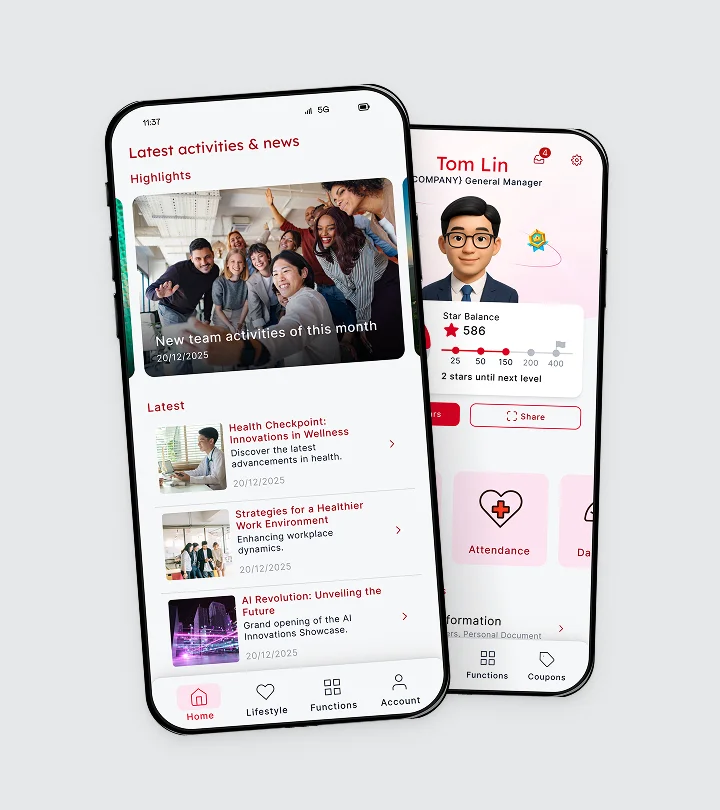
A prototype with basic functions was developed as to directly showcase clients.
Results
The concept sold twice before it shipped
The prototype and demo were convincing enough and helped close two client deals. One of them was confident enough to sign for a phase two that would include additional features and a more comprehensive reward system.
Learning
Confirming what really matters to clients before deepening research
The reward economy and the R&D journey-mapping tool were more sophisticated than what the client actually used: coins redeemed for gifts.
I now confirm what KPIs matter to the client before scoping investment.
Pilot-testing the methodology, not just pitching it
The strategy was grounded in strong research and market trends, but shipped without empirical validation.
Going forward, I would pilot-test surveys and processes like this before rolling them out, to confirm they actually work as intended rather than just sound right.
Push for a more cohesive user-journey
Design decisions leaned on leadership preference more than employee-validated needs, and features shipped as disconnected pieces gathered from benchmarks rather than a meaningful journey.
Going forward, I would further exchange with PM and analysts to develop a solid user requirements methodology.